



 Close Menu
 World
World
 Biography
 Health
 Education
 Business
 Lifestyle
 Sports
 Technology
 Animals
 History
 Food
Food
 Religious
 Startups
 Movies
 Politics
 Fashion
 Covid
Covid
 Diet
Diet
 Fitness
 Marketing
 Travel
 Science
 Reviews
 Social media
 Stories
 Facts
Facts
 Art
Art
 Entertainment
samiksha

Business
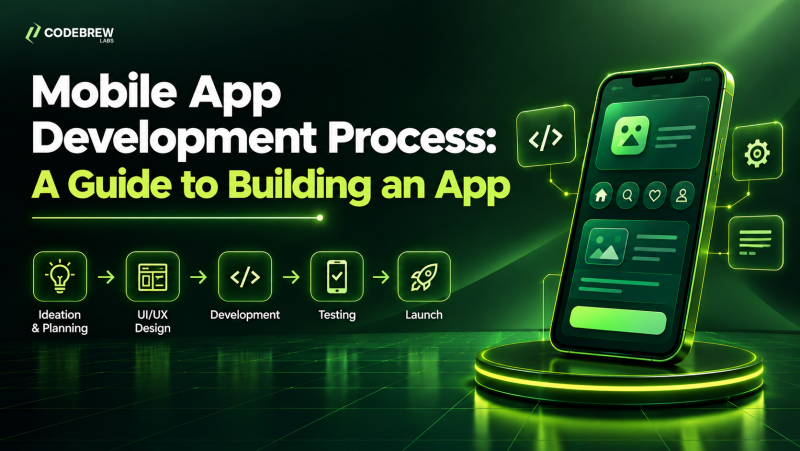
Mobile App Development Process: A Guide to Building an App
 samiksha
Building a mobile app is more than designing a few screens and writing code. A successful application requires careful planning, user-focused design, reliable technology, thorough testing, and continuous improvement after launch.
Whether you are a startup with a new idea or an established business looking to improve customer experiences, understanding the mobile app development process can help you make better decisions, manage resources, and avoid common mistakes.
From defining the app's purpose to selecting the right development approach, every stage plays an important role in creating a product that users want to download, use, and return to.
This guide explains the key stages of mobile app development and what businesses should consider at each step.
What Is the Mobile App Development Process?
The mobile app development process is a structured series of steps used to transform an application idea into a functional, scalable, and user-friendly digital product.
It typically includes:
- Idea validation and planning
- Market research
- Feature definition
- UI/UX design
- Technology selection
- Development
- Testing
- Deployment
- Marketing and user acquisition
- Maintenance and continuous improvement
While these stages are often presented in order, modern development teams may work on several activities simultaneously. For example, testing can begin during development, while user feedback can influence design decisions throughout the project.
The goal is not simply to launch an app, but to build an application that solves a genuine problem and delivers long-term business value.
1. Start With a Clear App Idea
Every successful mobile application begins with a clear understanding of the problem it aims to solve.
Before investing in development, businesses should ask:
- What problem will the app solve?
- Who will use it?
- Why would users choose it over existing alternatives?
- What makes the idea different?
- How will the app create business value?
For example, a food delivery app may aim to simplify ordering, while a healthcare app may focus on appointment scheduling or remote consultations.
A clear problem statement helps guide every later decision, from feature selection to user experience and technology.
Validate the Idea Before Building
An idea may sound promising, but it is important to validate whether users actually need the proposed solution.
Businesses can conduct surveys, interviews, competitor research, and early concept testing to understand demand.
This stage can help identify:
- Target audience needs
- Existing market gaps
- Competitor strengths and weaknesses
- Potential pricing models
- Features users consider essential
Early validation can reduce the risk of spending time and money on an application that does not solve a meaningful problem.
2. Conduct Market Research
Market research helps businesses understand the environment in which their application will compete.
This includes analyzing similar apps, customer expectations, industry trends, and potential opportunities.
For example, a business planning a fitness app may research existing fitness platforms, subscription models, wearable integrations, and user engagement features.
The objective is not to copy competitors. It is to identify what works, what does not, and where the new application can provide a better experience.
Market research can also help businesses make informed decisions about positioning, pricing, monetization, and launch strategy.
3. Define the App's Features and Requirements
Once the idea has been validated, the next step is to define what the application should actually do.
This is where businesses create a list of functional and technical requirements.
Functional Requirements
These describe what users should be able to do inside the app.
Examples include:
- Create an account
- Browse products or services
- Search for information
- Make payments
- Book appointments
- Send messages
- Track orders
- Receive notifications
- Manage profiles
Non-Functional Requirements
These describe how the application should perform.
Important considerations include:
- Performance
- Security
- Scalability
- Reliability
- Accessibility
- Data privacy
- Compatibility
- Response time
Defining these requirements early helps developers understand the scope of the project and reduces confusion during development.
4. Prioritize Features and Build an MVP
One of the most important decisions in mobile app development is determining which features should be included in the first version.
Many businesses make the mistake of trying to build everything at once. This can increase development costs, extend timelines, and make the product harder to test.
A better approach is to create a Minimum Viable Product (MVP).
An MVP includes the essential features needed to solve the primary user problem and launch the application.
For example, a food delivery MVP might include:
- User registration
- Restaurant listings
- Menu browsing
- Cart
- Order placement
- Payment
- Order tracking
Advanced features such as AI recommendations, loyalty programs, and complex analytics can be added later based on user feedback.
This approach allows businesses to test the concept, learn from real users, and improve the product before investing in a larger feature set.
5. Choose the Right Development Approach
The technology approach can significantly influence the cost, performance, scalability, and maintenance of an application.
Businesses generally choose between native, cross-platform, and other development approaches depending on their requirements.
Native App Development
Native applications are built specifically for a particular platform, such as iOS or Android.
They can provide strong performance and access to platform-specific capabilities.
Native development may be suitable for applications that require advanced device integrations, high performance, or highly customized platform experiences.
Cross-Platform App Development
Cross-platform development allows businesses to build applications for multiple platforms using a shared codebase.
This can help reduce development effort and simplify maintenance for many types of business applications.
However, the right choice depends on the app's complexity, performance requirements, device integrations, and long-term goals.
An experienced development team can help businesses evaluate the options and select the most suitable approach.
6. Design the User Experience and Interface
UI/UX design is one of the most important stages of the mobile app development process.
A technically powerful app can still fail if users find it confusing or difficult to navigate.
UX Design
User experience design focuses on how users interact with the application.
It includes:
- User flows
- Navigation
- Information architecture
- Wireframes
- Usability
- Accessibility
UI Design
User interface design focuses on the visual appearance of the application.
This includes:
- Colors
- Typography
- Icons
- Layouts
- Buttons
- Visual hierarchy
- Branding
The objective is to create an interface that is attractive, intuitive, and consistent.
A good design should help users complete tasks with minimal effort.
7. Select the Technology Stack
The technology stack includes the programming languages, frameworks, databases, APIs, and infrastructure used to build the application.
The right technology choices depend on the app's requirements.
For example, developers may need to select technologies for:
- Frontend development
- Backend development
- Database management
- Cloud infrastructure
- Authentication
- Payment integration
- Push notifications
- Analytics
- AI and machine learning
- Third-party APIs
Technology selection should consider not only current requirements but also future scalability and maintenance.
A poorly chosen technology stack can create unnecessary technical limitations later.
8. Develop the Application
Once the requirements, design, and technology stack are finalized, development begins.
This stage typically includes frontend development, backend development, API integration, and database implementation.
Frontend Development
The frontend is the part of the application users interact with.
Developers build screens, navigation, forms, buttons, animations, and other interactive elements based on the approved design.
Backend Development
The backend handles the application's core logic and data.
It may manage:
- User accounts
- Databases
- Authentication
- Payments
- Notifications
- Business rules
- APIs
- Data processing
API Integration
APIs allow the application to communicate with external services.
For example, a mobile app may integrate APIs for payments, maps, social login, analytics, or third-party services.
During development, teams should follow coding standards, maintain documentation, and use version control to keep the project organized.
9. Integrate AI and Advanced Features Where Useful
Modern mobile app development increasingly includes AI-powered capabilities.
However, AI should be integrated based on a clear business purpose.
For example, businesses may use AI for:
- Personalized recommendations
- Intelligent search
- Chatbots
- Predictive analytics
- Voice recognition
- Image analysis
- Automated workflows
The development team should evaluate whether an existing AI service, custom model, or hybrid approach is most suitable.
The focus should remain on creating useful experiences rather than adding AI simply because it is a popular technology.
10. Test the Application Thoroughly
Testing is essential to ensure the application works reliably before launch.
A mobile app development team may conduct several types of testing.
Functional Testing
Checks whether features work as expected.
Usability Testing
Evaluates whether users can navigate the app easily.
Performance Testing
Measures speed, responsiveness, and stability.
Security Testing
Identifies vulnerabilities and protects sensitive data.
Compatibility Testing
Checks how the app performs across different devices, operating systems, and screen sizes.
User Acceptance Testing
Allows stakeholders or selected users to evaluate whether the application meets business and user requirements.
Testing should continue throughout development rather than being treated as a final step.
11. Deploy the App to the App Stores
Once the application has been tested and approved, it can be prepared for deployment.
This includes creating app store listings, preparing screenshots, writing descriptions, configuring release settings, and meeting platform requirements.
Businesses should also ensure that the application complies with relevant privacy, security, and payment requirements.
A successful launch requires more than uploading the app. It also requires a clear release strategy and a plan for attracting users.
12. Market the App and Acquire Users
Even a well-developed application needs visibility to succeed.
Businesses can promote their apps through:
- Search engine optimization
- App Store Optimization (ASO)
- Social media marketing
- Content marketing
- Paid advertising
- Email campaigns
- Partnerships
- Referral programs
The marketing strategy should focus on communicating the app's value clearly.
For example, instead of simply saying “Download our app,” a business could highlight the specific problem the app solves.
13. Monitor Performance and Improve Continuously
The mobile app development process does not end at launch.
After release, businesses should monitor performance, user feedback, crashes, engagement, retention, and other relevant metrics.
Analytics can help answer questions such as:
- Which features are used most often?
- Where do users stop using the app?
- Are users returning regularly?
- Which devices experience problems?
- What improvements do customers request?
This information can guide future updates and help businesses improve the application over time.
Regular maintenance may include:
- Bug fixes
- Security updates
- Performance improvements
- New features
- OS compatibility updates
- Infrastructure scaling
Continuous improvement is essential for keeping an app relevant and competitive.
Common Mistakes to Avoid in Mobile App Development
Businesses can improve their chances of success by avoiding common development mistakes.
Building too many features: A complex first version can delay launch and increase costs.
Ignoring user research: Without understanding users, businesses may build features that do not solve real problems.
Choosing technology without a strategy: The cheapest or most popular technology is not always the right choice.
Underestimating testing: Poor testing can lead to crashes, security issues, and negative reviews.
Neglecting post-launch support: Applications require ongoing maintenance and improvement.
Focusing only on design: A visually attractive app must also be functional, secure, and reliable.
How an Experienced App Development Company Can Help
Building a successful application requires expertise across multiple areas, including product strategy, UI/UX design, frontend development, backend engineering, testing, deployment, and maintenance.
An experienced app development company can help businesses manage these stages more effectively and make informed decisions about technology, features, and scalability.
The right development partner should understand the business objective behind the app and work toward creating a product that delivers measurable value.
Code Brew Labs helps businesses transform digital ideas into scalable mobile applications, combining product strategy, UI/UX design, modern technologies, and development expertise to build solutions aligned with business goals.
Conclusion
The mobile app development process is a journey that requires careful planning, collaboration, and continuous improvement.
From validating an idea and defining features to designing, developing, testing, and maintaining the application, every stage contributes to the final product's success.
Businesses that approach app development strategically can create applications that improve customer experiences, streamline operations, and support long-term growth.
The most successful apps are not necessarily the ones with the most features. They are the ones that solve real problems, provide a smooth user experience, and continue evolving with the needs of their users.
Source:
Click for the: Full Story
You might like









You Might Like this